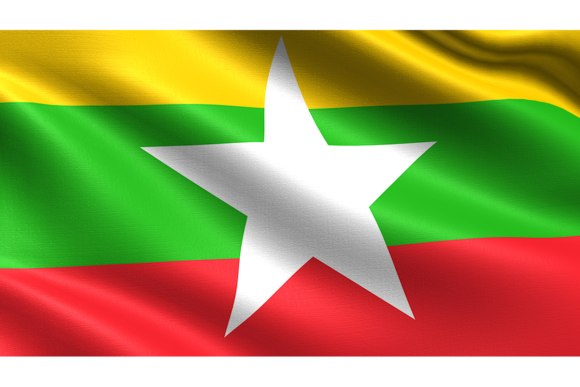
Myanmar Flag: Waving Fabric Texture for Presentations
When you need to communicate national pride, cultural significance, or a strong sense of place, a flat, static image often falls short. There is a distinct power in seeing a flag caught in a gust of wind, the fabric rippling and folding to reveal shadows and highlights. This specific visual asset—a Myanmar Flag featuring a realistic, highly detailed waving fabric texture—serves a specific purpose in the toolkit of modern creatives. It is not just a symbol; it is a piece of premium design material intended to add depth and motion to your work.
Unlike standard vector graphics which can sometimes feel sterile or overly digital, this asset relies on the tactile quality of cloth. The visual personality of this image is grounded in realism. You can almost feel the weight of the material and the breeze that moves it. For designers and content creators, this distinction matters. It bridges the gap between a digital representation and a physical object, making it an ideal choice for projects where authenticity is key.
Visual Realism and Technical Quality
The defining characteristic of this asset is its resolution: 3840×2160px. In the world of web design and print documents, resolution is the currency of quality. At 4K, the weaving of the fabric is visible. The creases and folds are not blurred or pixelated; they are sharp and distinct. This level of detail allows you to crop into specific sections of the flag without losing integrity. If you need a close-up shot of the corner for a social media profile picture or a detail shot for a presentation slide, the texture holds up.
Furthermore, the lighting in the image is crucial. A good waving flag texture accounts for light source direction, creating natural gradients. The peaks of the folds catch the light, while the valleys remain in shadow. This creates a three-dimensional effect that can make a flat design layout pop. Whether you are working on motion graphics or a static PDF, this natural shading provides a sense of volume that is difficult to synthesize from scratch.
Practical Applications for Creatives
Understanding where to use a Myanmar Flag with a waving texture is about matching the asset's energy with the project's goals. Here is how different professionals can integrate this file:
- Presentations and Corporate Reports: For businesses operating in or with Myanmar, a slide deck needs to feel grounded. Placing a high-res waving flag in the header of a slide or as a background element behind key statistics adds a layer of professionalism and cultural awareness. It moves a standard PowerPoint into the realm of professional editorial design.
- Web Design and UI: In website headers, a waving flag can serve as a dynamic hero image. It works exceptionally well for news sites covering regional topics, travel blogs, or e-commerce stores specializing in goods from the region. The texture adds visual interest without requiring animation code, though it serves as a perfect placeholder for video backgrounds.
- Social Media Graphics: Platforms like Instagram and Facebook favor high-contrast, eye-catching visuals. A realistic flag texture can be used for National Day announcements, cultural heritage posts, or community engagement campaigns. It acts as a strong background that anchors the text overlay.
- Packaging and Merchandise: If you are designing merchandise—such as T-shirts, mugs, or tote bags—a realistic fabric texture often prints better than a flat digital color. It mimics the look of an embroidered patch or a sublimation print, adding perceived value to the final product.
Integrating Texture into Brand Identity
In brand identity design, consistency is king, but texture is the queen that adds warmth. While a brand might typically rely on a clean sans serif font or a modern serif font for its typography, the supporting imagery defines the mood. Using a high-quality fabric texture suggests tradition, resilience, and tangible reality.
When pairing this image with typography, consider the contrast. The flag is organic, irregular, and flowing. Therefore, a rigid, geometric display font often pairs well, creating a visual tension between the structured text and the fluid fabric. Alternatively, for a softer, more emotional approach, a script font or handwritten font can complement the natural movement of the wind.
However, readability remains the priority. Because the flag has high detail and varying contrast (lights and darks in the folds), placing text directly on top of the image can be risky. It is a best practice in graphic design to use a semi-transparent overlay, a solid color block, or a drop shadow to ensure your message isn't lost in the texture.
Evaluating Fit and File Management
Before integrating this asset into your workflow, consider the file format and usage rights. Provided as a .jpg, this image is optimized for broad compatibility across software like Adobe Photoshop, Illustrator, InDesign, and Canva. However, because it is a raster image (pixel-based) rather than a vector, scaling it up significantly beyond its native 3840px width will result in quality loss. It is best used at its native size or smaller.
For those managing a library of design assets, organization is key. Tag this file not just as a "flag," but with keywords related to its utility: "fabric texture," "waving cloth," "4K background," and "patriotic design." This ensures it surfaces quickly when you are brainstorming concepts for a new campaign.
Final Thoughts on Utility
The value of a specific asset like the Myanmar Flag waving fabric texture lies in its specificity. Generic stock photos often lack the resolution or the lighting quality required for high-end work. This image solves a specific problem: it provides a realistic, high-fidelity representation of a national symbol that can be used across digital and print mediums.
Whether you are a small business owner creating a flyer for a local event, a marketer designing a targeted ad campaign, or a publisher laying out a book cover, having access to professional-grade imagery elevates the final product. It signals to your audience that you care about the details, and in the world of design, the details are everything.